A practical guide to building living cells of collective consciousness
How a single invitation, rooted in authenticity and vibratory awareness, can grow into a living collective with the power to create, teach, and serve.
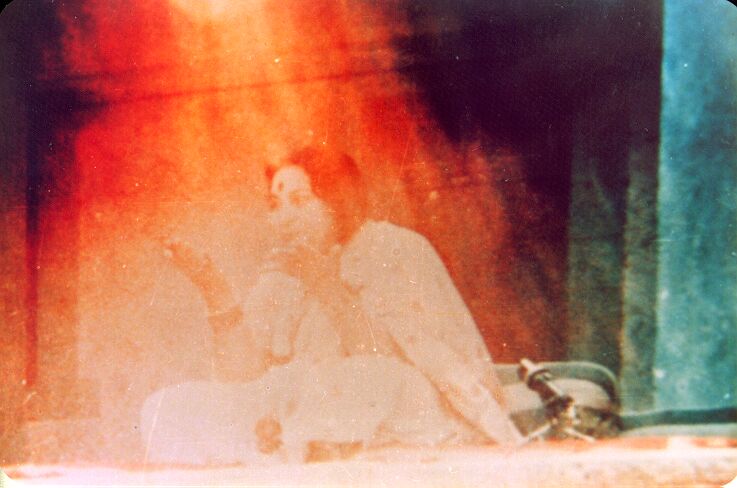
"The culture of the Spirit is the pattern of behaviour we have with others." Shri Mataji Nirmala Devi, 26 October 1985, USA
The Premise
Everything begins with one person who decides to invite. Not to recruit, not to teach, not to convince. Simply to say: I have found something worth sharing, and I would like to share it with you.
This pathway is designed for Sahaja Yogis who feel ready to move beyond their individual practice and begin building something together. It is not a programme to follow rigidly. It is a sequence of thresholds, each one opening naturally onto the next, each one grounded in the same foundational practice: sitting together in vibratory awareness, listening deeply, and letting the collective intelligence of the group do what no individual could do alone.
The five steps that follow are not a ladder. They are a spiral. You may find yourself returning to an earlier step with new eyes, or discovering that your group needs to spend a long time at one stage before the next one becomes relevant. Trust the vibrations. They know the pace.
The Pathway
Before the Invitation
Before inviting others, be in order within yourself.
This is not a step to complete. It is a condition to verify, honestly, in meditation. Three questions are enough:
Am I living what I am about to propose, at least partially? Am I inviting from a genuine desire, or from an expectation? Am I prepared to not control what will emerge?
The answer does not need to be a perfect yes. It simply needs to be honest. An invitation that comes from the Self lands differently from one that comes from the ego. The people you invite will feel the difference before you say a word.
The Beginning
A conversation, not a recruitment.
You do not send a link. You speak to someone. The invitation arises from a sincere observation: "I thought of you for this, because..." You share what this practice brings you, without convincing. You leave the other person free to say yes or no, and you mean it.
The quality of this first conversation sets the tone for everything that follows. If it comes from joy and authenticity, the person who accepts will arrive already aligned. If it comes from a sense of obligation or duty, they will feel that too.
A good invitation is specific, personal, and brief. It points toward an experience, not a concept.
The First Gathering
Two or three people. No more, not yet.
Before forming a group, you begin small. Two or three people, in person or by video, for a first experience of the circle. The format is simple and unhurried. What matters is not what is said, but the quality of attention that is held.
This first circle has no agenda other than the experience itself. Something shifts when people realise that they can be together in this way: listening without preparing a response, sharing without performing, being present without managing the outcome.
A Simple Format
Three Processes to Explore
Listening to Shri Mataji's Words
The group meditates together, then listens to an extract from one of Shri Mataji's talks. Each participant shares in turn the words that touched them most, and what they took from them. Pairs then explore how to integrate this wisdom into daily life, before returning to the full circle. No debate, no cross-talk: only speaking and deep listening.
The Creative Round
An open creative space in which participants express a collective insight through movement, drawing, sound, or story. The facilitator sets a simple prompt and holds the time. There is no right or wrong output; the process itself is the experience. What emerges is often surprising, always joyful, and invariably more than any individual could have created alone.
Check-in and Check-out
Every session opens with a check-in round: each person shares briefly their inner state in this moment, and one thing they are hoping for from this gathering. Every session closes with a check-out: what are you taking away? These two bookends are deceptively simple and profoundly powerful. Hearing each other's inner state builds a quality of trust that opens the space for everything else.
Growing the Circle
When the group is ready to go further.
Once the circle has found its rhythm and begins to grow beyond five or six people, or once a collective intention begins to emerge (a project, a decision to make, a teaching to prepare), it is time to introduce a light structure: the five roles.
Each member chooses a role for the session, not permanently. The roles rotate. This is not an organisation chart. It is a practice of complementarity: learning that a group functions better when each essential dimension of the collective work is consciously tended by someone.
The Five Roles
The Gardener
Ensures that ideas move from reflection into action. Like a gardener, they cultivate commitments and make sure that decisions bear fruit. They motivate everyone to honour what was agreed and contribute to implementation.
The Guide
Maintains the coherence and fluidity of the process. The Guide structures discussions, ensures the group respects its own agreements, and facilitates the key stages of collaborative work. Their role is to keep the group on course.
The Carer
Tends the emotional and relational well-being of the group. The Carer ensures that everyone feels heard, respected, and supported, fostering a climate of empathy and mutual trust that makes genuine collaboration possible.
The Scribe
Captures and preserves the information, ideas, and decisions made during the group's discussions. The Scribe ensures the traceability and collective memory of the work, so that nothing essential is lost between sessions.
The Source
Holds the vision and ensures that actions and decisions remain aligned with the group's shared direction. The Source feeds and revives the shared intention, inspiring the group to pursue a common goal. When a member proposes a project, they naturally take on this role: they alone can say whether an evolution is still faithful to the original vision.
Once the roles are defined, the real challenge begins: learning to make them work together.
Creating Together
When the group becomes a creative force.
The group chooses together a project: a teaching to offer in the community, an event to organise, a piece of content to create, an action to take in the world. Any member can bring a proposal. If several proposals emerge, the group decides collectively which one to support. The choice belongs to everyone.
The person who proposes a project automatically takes on the role of Source. This is not a position of authority, but of responsibility: the Source is the only one who can say whether a proposed evolution remains true to the original vision or departs from it. In this sense, the project does belong to its proposer. But the energy, the creativity, and the collective intelligence that bring it to life belong to the whole group.
At each step of the project, the group uses the seven polarities of living systems as a compass, not a checklist. The questions are simple: Are we honouring both the connection of the group and the autonomy of each person? Are we listening to feedback without losing sight of the vision? Are we grounded enough in being to let the doing unfold naturally?
A project built this way does not feel like work. It feels like something growing.
The Circle Multiplies
The pathway continues through others.
Each member of the group becomes, at their own pace, capable of inviting in turn. Not to "teach" the process, but to live it with new people. The criterion is not technical mastery. It is the quality of presence and the rootedness in the vibration.
This is how something grows without being pushed. Each circle that forms carries the same seed: an honest invitation, a simple format, a willingness to listen more than to speak. From there, everything else unfolds.
The pathway has no end. It has a direction.
The Living Compass
Living systems do not operate in straight lines. They breathe. They expand and contract, connect and differentiate, act and rest. The seven polarities below are not opposites to be resolved, but creative tensions to be held. Each polarity names two qualities that, taken alone, become distortions: connection without autonomy becomes fusion; autonomy without connection becomes isolation. But when both poles are honoured simultaneously, something new emerges that neither pole could produce on its own.
These polarities are offered as a compass for collective work. Not to be analysed, but to be felt. In meditation, a group can ask: where are we on this axis right now? The vibratory response will be more reliable than any intellectual assessment.
The seventh polarity, "Let go / Step up", is the meta-polarity that contains all the others. It points to the fundamental movement of Sahaj: releasing what is not the Self, and stepping fully into what is.
You will find the source of all these elements in the writings of Tom Locke, available on his personal page: tomlocke.com
Going Further
The processes of the circles (check-in, listening rounds, dyads, creative spaces) and the five facilitation roles (Gardener, Guide, Carer, Scribe, Source) come from the shared work of the authors of the Joy Giving Society. They are practical tools, designed to be used immediately, without special training, by any group willing to sit together in awareness.
Tools of Togetherness. For each step of this journey, the society has gathered these tools in one place: invitations that worked, the roles of the facilitator, a five-session introductory programme, some twenty exercises, and the core tools of collective decision, from rounds to consent. The toolkit is shared on request with those who wish to start or support a circle, together with a mentor.
Request the toolkit →